

Table of Contents
 Set as a preferred Google source
TL;DR
When an interviewer asks if you have any questions, pick two or three that matter to your decision. Strong closing interview questions cover the role’s daily work, how success is measured, the team and manager, growth opportunities, and next steps. Match them to the person interviewing you, keep your questions to ask at the end of a phone interview focused on process, skip anything you could find online, and raise salary at the right stage.
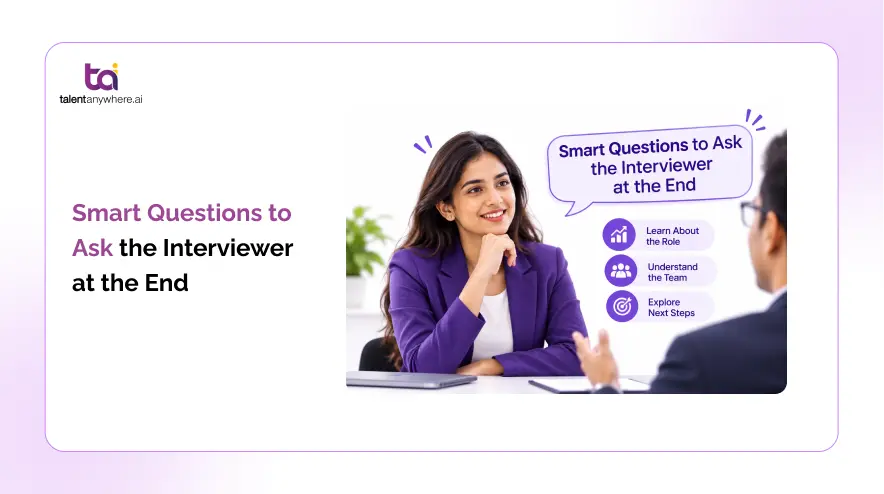
“So, do you have any questions for us?” Most interviews end with that line, and many candidates simply say no. That’s a missed chance. The questions to ask at the end of an interview help you learn what the job really involves, who you’d work with, how success is judged, and whether you’ll grow. They also show you came prepared. Below are 25 questions grouped by purpose, why each one works, and which to ask a recruiter, hiring manager, or future teammate.
Why Should You Ask Questions At The End Of An Interview?
Think of the questions to ask at the end of an interview as your half of the evaluation. The company is deciding whether you fit the role, and you’re deciding whether the role fits you. Good end of interview questions help in three ways.
- You understand the job: Job descriptions rarely show what the first few months feel like.
- You can judge the company and team: How someone talks about feedback or workload says a lot.
- You show genuine interest: A specific question signals preparation better than a generic one.
Know What To Ask Before They Ask You
Walk into your next interview with sharp answers and even sharper questions. TalentAnywhere.ai helps you prepare for every round.
25 Smart Questions To Ask At The End Of An Interview
The best questions to ask at the end of an interview cover daily work, how success is measured, the team and manager, growth, and next steps. You don’t need all 25. Pick the two or three that answer what you most need to know.
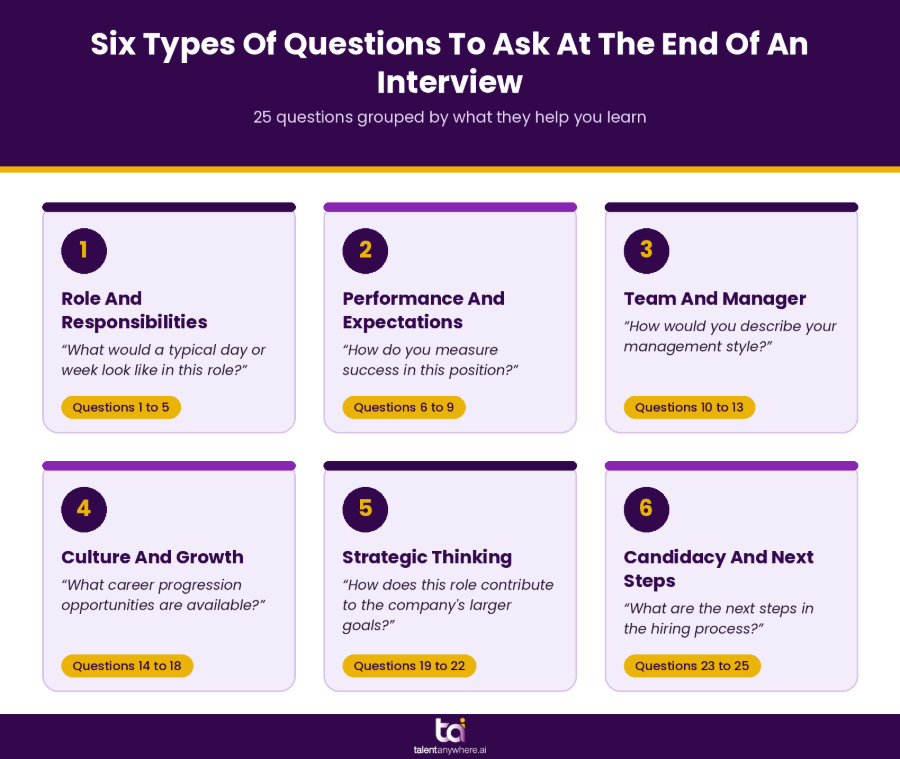
Questions About The Role And Responsibilities
1. What would a typical day or week look like in this role?
It moves past the job post to real tasks and how your time gets split.
2. What are the biggest challenges someone in this position might face?
You hear about the hard parts upfront, and a candid answer is a good sign.
3. What would you expect the person hired for this role to accomplish in the first 90 days?
It shows how fast you’re expected to deliver and whether onboarding sounds realistic.
4. How has this role evolved over time?
Shifts in scope hint at whether the job is growing, shrinking, or still taking shape.
5. Is this a new position, or am I filling an existing vacancy?
A new role may be yours to shape, while a replacement has a track record to learn from.
Also Read: Where Do You See Yourself In 5 Years
Questions About Performance And Expectations
6. How do you measure success in this position?
You learn whether success means targets, project outcomes, or stakeholder feedback.
7. What separates an average performer from an exceptional performer in this role?
It shows what the manager values most and gives you a clear bar.
8. What are the most important priorities for the person joining this team?
Teams usually hire to fix a specific problem. This tells you which one.
9. What would make you feel, six months from now, that you hired the right person?
It turns vague expectations into the one outcome they care about most.
Questions About The Team And Manager
Your manager shapes your daily experience. Gallup’s research found that managers account for at least 70% of the variance in employee engagement scores.
10. Can you tell me more about the team I would be working with?
You get a feel for team size, experience levels, and who you’d rely on.
11. How does the team usually collaborate on projects?
It tells you whether work is mostly independent or shared.
12. How would you describe your management style?
Some managers check in daily while others step back, so this helps you judge fit.
13. How often do managers and team members discuss performance and development?
Regular check-ins mean feedback isn’t saved for an annual review.
Questions About Company Culture And Growth
Culture is hard to judge from a careers page. LinkedIn’s 2018 Workplace Learning Report found that 94% of employees would stay at a company longer if it invested in their career development, so growth is worth asking about.
14. What do you personally enjoy most about working here?
A specific, unrehearsed answer suggests real satisfaction.
15. How does the company support employees who want to develop new skills?
Listen for concrete examples like training budgets, mentoring, or stretch projects.
16. What career progression opportunities are available for someone in this role?
It signals ambition and shows whether there’s a visible path forward.
17. What do you think makes employees stay with this company?
The reasons people stay reveal the culture.
18. How does the company help teams adapt to changing priorities or business needs?
It shows whether change comes with clear communication or chaos.
Also Read: How To Answer Tell Me About Yourself
Questions That Show Strategic Thinking And Initiative
People often call these killer questions to ask at the end of an interview. They won’t guarantee an offer, but they show bigger-picture thinking.
19. What are the biggest priorities or challenges for the department right now?
It links your role to the department’s wider goals.
20. How does this role contribute to the company’s larger goals?
You see how visible the work is and can speak to impact in later rounds.
21. Are there any upcoming projects or initiatives this person would contribute to?
It previews real work and often sparks a richer conversation.
22. What opportunities do you see for this role to make a meaningful impact?
It shows where they see room to improve, useful if you want ownership.
Closing Questions To Understand Your Candidacy And Next Steps
Closing interview questions help you clear up doubts and learn what happens next.
23. Is there anything about my experience or qualifications that you would like me to clarify?
You can address a concern while you’re still in the room.
24. Is there anything else I can share that would help you evaluate my suitability for the role?
It’s a polite way to fill gaps in what they know about you.
25. What are the next steps in the hiring process, and when can I expect to hear from you?
Timelines vary widely, so knowing yours helps you plan follow-ups and weigh other offers.
What Questions Should You Ask Depending On Who Is Interviewing You?
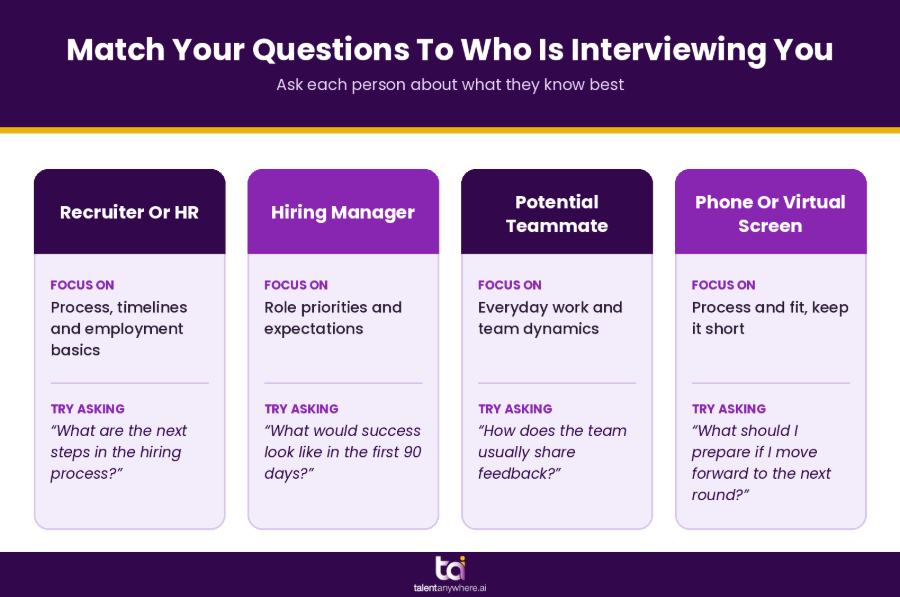
Knowing what questions to ask at the end of an interview depends on who’s across the table. Match each question to what that person knows.
Questions To Ask A Recruiter Or HR Representative
Recruiters know the process, timelines, and employment basics best.
- What are the next steps in the hiring process?
- How is the interview process structured?
- What are the key qualities the hiring manager is looking for?
- Is there anything about the role or employment arrangement I should understand before proceeding?
Questions To Ask The Hiring Manager
The hiring manager owns the role’s priorities, so focus on responsibilities and expectations.
- What would success look like in the first 90 days?
- What are the biggest challenges facing the team?
- How would you describe your management style?
- What would you want the new hire to improve or take ownership of?
Questions To Ask A Potential Teammate
Peers give the most honest view of everyday work and team dynamics.
- How does the team usually share feedback?
- What does collaboration look like during a typical week?
- What do you find most rewarding about working on this team?
Questions To Ask At The End Of A Phone Or Virtual Interview
Early phone screens are short and usually run by a recruiter, so keep your questions to ask at the end of a phone interview focused on process and fit. Save strategy questions for the hiring manager. Try these:
- What would the next stage of the interview process involve?
- What are the most important qualifications you are looking for?
- What should I prepare if I move forward to the next round?
- Is there anything else you would like me to clarify about my experience?
On video calls, keep your questions to ask at end of interview calls on a note beside the screen.
How To Choose The Best Questions To Ask At The End Of An Interview
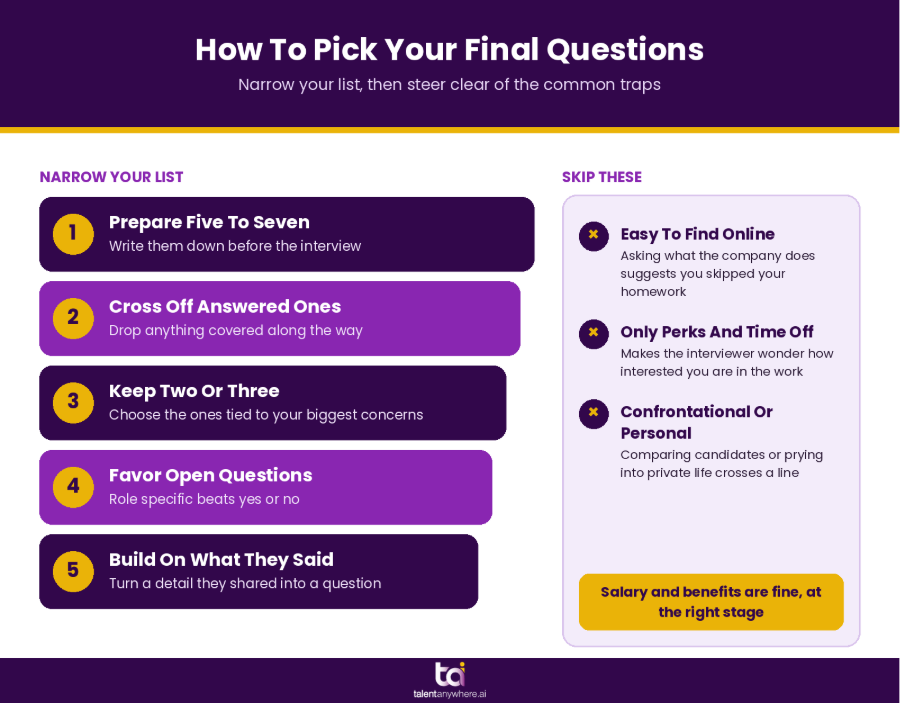
You don’t need to use every one of your questions to ask at the end of an interview. Good questions to ask at the end of a job interview sound like part of the conversation, not a script. To narrow your list:
- Prepare five to seven questions before the interview.
- Cross off any that get answered along the way.
- Pick two or three that address your biggest concerns.
- Favor open-ended, role-specific questions over yes-or-no ones.
- Build a follow-up on something the interviewer said, like, “You mentioned the team is switching platforms. How far along is that?”
Questions You Should Avoid Asking At The End Of An Interview
Not all questions to ask at the end of an interview help your case. Usually the problem is timing or tone, not the topic.
Questions About Information You Could Easily Find Online
Asking what the company does suggests you skipped your homework. Check the website, recent news, and job post first.
Questions Focused Only On Perks And Time Off
Leave and benefits matter. But if they’re all you ask about, the interviewer may wonder how interested you are in the work.
Questions That Sound Confrontational Or Overly Personal
“How do I compare to the other candidates?” puts the interviewer on the spot, and questions about their private life cross a line.
Salary, benefits, and work arrangements are still legitimate topics. Raise them at the right stage, often with the recruiter or once an offer is close.
Also Read: How To Write A Follow Up Email After An Interview
End Your Interview With The Right Questions
The right questions to ask at the end of an interview help you understand the role, test whether the team suits you, and make a better career decision. Prepare a few, listen closely, and keep only the ones that still matter by the end. Strong end of interview questions won’t win the job alone, but you’ll walk out with real answers. talentanywhere.ai can help you prepare for both sides of the conversation, because a good interview works both ways. You answer their questions, and you ask the right ones too.
Your Next Interview Deserves Better Prep
From the first answer to the final question, TalentAnywhere.ai gives job seekers AI-powered career tools to walk in confident and walk out informed.
FAQs
What Are The Best Questions To Ask At The End Of An Interview?
How Many Questions Should I Ask At The End Of An Interview?
Is It Okay To Ask About Salary At The End Of An Interview?
What If The Interviewer Has Already Answered All My Questions?
What Is One Unique Question To Ask At The End Of An Interview?
What Questions Should I Ask At The End Of A Phone Interview?


talentanywhere.ai
Build professional resumes with AI, improve your ATS score, and apply with confidence. talentanywhere.ai empowers job seekers with smarter resume creation and career tools for every stage.